THE CHARTER OF THE KINHOLD OF UNIKIN
The constitution of the Kinhold. Schedule A forms part of it. Amendable by two-thirds, except where Article 11 says otherwise. Publishable as written — a model is only a model if someone else could lift it.
A Kinhold is a small number of people who have agreed what they are to one another, and have written it down where anyone can read it.
UniKin is one. It holds no ground, commands nobody, and asks for nothing it could not ask for twice.
Everything below follows from one line: consent is the whole of the law. If a mechanic cannot be justified by consent, it is out. That is why there is no oath, no fee, no interview, no hereditary membership and no difficulty in leaving.
1. The Kinhold
1.1 The Kinhold is called UniKin. Its people are the Kin. Its assembly is the Kinmoot. Its door to the world is the Embassy.
1.2 The Kinhold exists wherever its Kin are. It claims no territory and no jurisdiction, and it would not be improved by acquiring either.
1.3 The Kinhold is a made thing, in the way that a song or a town band is a made thing. It is not a state, and the difference is not a disappointment: a state governs people who never chose it, and that is the condition this Charter was written against.
2. The principle
2.1 Consent is the whole of the law. Every rule of the Kinhold must be justifiable by the consent of the people it binds — given by them, in their own words, and revocable by them.
2.2 A proposed rule is tested by one question: who consented to this, and may they withdraw? A rule that cannot answer both halves is not adopted, whatever else recommends it.
2.3 Where this Charter is unclear, it is read the way that leaves a Kin freer to leave.
3. The Kin
3.1 Citizenship is governed by Schedule A, which forms part of this Charter and is free-standing: any other Kinhold may adopt it whole.
3.2 No Kin holds authority over another Kin. An office under Article 5 carries the duty named in it and nothing else — not precedence, not a casting voice, and no power to refuse a Kin anything this Charter gives them.
3.3 A Kin owes three things and no more (Schedule A, §6). Anything else asked of a Kin is a request, however it is worded, and a Kin who declines one is thought no less of.
4. The Kinmoot
4.1 The Kinmoot is every Kin. There is no smaller body with power over it, and none may be created.
4.2 One Kin, one voice. Attendance is not a qualification: a Kin who cannot be present may still put a question and still vote.
4.3 The Kin are scattered, so the Kinmoot meets mostly at distance, and meets in the open at least twice a year.
4.4 Any Kin may put a question. It is put in writing and carries the name of the Kin who put it.
4.5 Silence for seven days is assent — so that the Kinhold is not stalled by inattention. The cost of that is real, and is paid in one place only: no question that removes a right, spends money, or binds a Kin to something new may pass on silence. Those need votes.
4.6 An ordinary resolution carries by a majority of those voting, provided at least nine Kin vote or a tenth of the Roll, whichever is the greater.
4.7 A two-thirds resolution is required to amend this Charter, alter the cap, create or abolish an office, remove a Kin, or dissolve the Kinhold.
4.8 Every question, every vote and every reason is entered in the Register, and stays there. Nothing is settled in private: a decision that was not written down did not happen.
5. Offices
5.1 There are three offices and no more: the Scrivener, who keeps the Register and the Rolls; the Steward, who keeps the account and the Embassy's paid things; and the Herald, who puts the Kinmoot's questions, publishes what it decides, and answers the world.
5.2 Any Kin may stand. The Kinmoot chooses for one year. No Kin holds the same office more than two years running, and no Kin holds two offices at once.
5.3 An office is a duty, not a rank.
5.4 A fifth of the Roll may petition for a recall, and a majority of those voting removes the office-holder. The petitioners need give no reason. The cost is named: holding office is not a right, and a body that may recall without reason may be unfair.
5.5 An office may stand vacant. A vacant office makes a smaller Kinhold, not a broken one; until it is filled the duty falls to the Kinmoot.
6. The Register and the Rolls
6.1 The Scrivener keeps three books: the Roll of Kin, the Quiet Labour Roll, and the Register of questions, votes and reasons.
6.2 All three are public, save that a Kin may be listed as Kin, name withheld and remain fully Kin, and that nothing recording a person under sixteen is published at all.
6.3 A Kin may correct their own entry at any time. A correction is shown as a correction: the Roll is kept true, not kept tidy.
6.4 A refusal — of admission, of an entry, of a request at the Embassy — is given with a reason, in writing, and the reason is entered in the Register. No is allowed. An unexplained no is not.
7. The Embassy
7.1 The Embassy is where the Kinhold meets people who are not Kin. Anyone may call.
7.2 The Embassy may charge for the room, for the sessions, and for the shop. It may charge for nothing that Schedule A §12 lists as free.
7.3 A visitor is owed an answer and a reason. They are not owed an invitation, and the Kinhold does not pretend otherwise to be liked.
8. Money
8.1 No fee is charged for citizenship, at any point, in any form. Citizenship is never the product.
8.2 The Steward keeps one account. Once a year it is published in the Register in full: what came in, what went out, what is held.
8.3 The Kinhold takes no money that carries a condition on who may be Kin or on what the Kinmoot may decide. Gifts, yes. Strings, no.
8.4 What is left over is spent on the common things — the room, the stamps, the post, the making — or it is given away. It is not hoarded as a measure of the Kinhold's health, because it is not one.
9. Grievance and removal
9.1 A Kin may be removed only for a recorded cause: a false entry on the Roll, or conduct that has cost another Kin something.
9.2 The charge is put in writing and carries the name of the Kin who brings it. The Kin charged has fourteen days at least to reply, and the reply is entered whole and unedited. Removal needs a two-thirds resolution.
9.3 A Kin who is the one harmed may speak to the question but does not count toward it.
9.4 A removed Kin may apply again after a year, on the same terms as anyone else, because there is no interview for anyone else either.
10. Those who cannot keep the duties
10.1 A Kin who can no longer keep the three duties may be granted Kin Emeritus by assent: no duties, no vote, full standing, and the entry is permanent.
10.2 Wards are governed by Schedule A §9. A Ward is entered at the Embassy in person or by writing, never through a form on the open web, and no detail of a Ward is published.
11. Amendment, and the sentence that cannot be amended
11.1 An amendment is proposed in writing, published whole at least fourteen days before the vote, and carries by two-thirds.
11.2 An amendment does not bind a Kin until that Kin next renews. Until then they are held to what they actually affirmed — which is the only thing they ever consented to.
11.3 The second sentence of the affirmation cannot be amended. Not by two-thirds, not by unanimity, not in an emergency. I may leave is the condition on which every other sentence here was agreed to, and a body that could take it away was never asking for consent in the first place.
11.4 If the Kinmoot ever resolves to remove that sentence, the resolution takes effect as a dissolution under Article 12. The Kinhold ends rather than continue on those terms.
12. Dissolution
12.1 A two-thirds resolution dissolves the Kinhold.
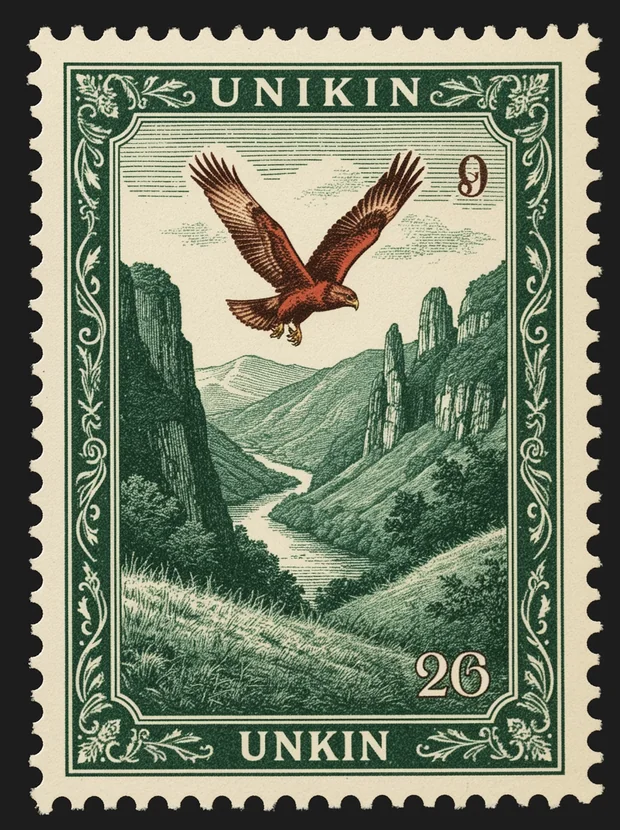
12.2 On dissolution the Register and the Rolls are published in full and placed where they can still be read; what is owed is paid; what remains is given to some body doing something like the common things; and the stamps and the plates go to the Kin. Every Kin on the Roll that day is issued the leaver's stamp.
12.3 Dissolution is recorded as a fact about the Kinhold, not a failure of it. The same is true of every Kin who leaves before it.
13. Standing in the world
13.1 Nothing the Kinhold issues is an identity document, a travel document, or proof of nationality, and none is offered as one. Its passports, stamps and cards are works. What they are worth is the agreement they record.
13.2 This Charter relieves nobody of the law where they live, and claims no power over anyone who is not Kin.
13.3 Kin may hold any other citizenship, nationality or micronational allegiance. The Kinhold claims no exclusivity and asks for none.
What it deliberately does without
No head of state. No executive. No council between the Kin and the Kinmoot. No casting vote. No secret session. No standing committee. No permanent office-holder. No treasury kept for its own sake. No power over anyone who has not affirmed.
Each omission is a decision, and each has a cost worth naming. With no executive, nothing moves between meetings unless a Kin moves it, and some things will not get done. With no council, every question goes to everybody, and some of them are dull. Assent by silence means a Kin who stops reading has agreed to things — which is why the questions that could hurt them are the ones silence cannot carry. Offices recallable without reason will one day remove someone who did nothing wrong. Those are the prices of the model, and paying them is what makes the rest of it true.
One thing to protect above all: the affirmation's second sentence. The moment leaving becomes difficult — a form, a fee, a delay, a guilt — the Kinhold has quietly become the thing it was built against.
SCHEDULE A — CITIZENSHIP
To the Charter of the Kinhold of UniKin. Free-standing. May be adopted whole by any Kinhold.
1. Principle
1.1 Citizenship of the Kinhold is free in both senses: no fee is charged at any point, and a Kin is at liberty at all times.
1.2 Citizenship is created by consent, given and recorded. It is not conferred by birth, purchase, tenure, residence, title or subscription.
1.3 No Kin is a subject. There is no oath of allegiance. There is an affirmation, and it is two sentences long.
2. The affirmation
I consent to be Kin of UniKin. I may leave.
Cydsyniaf i fod yn Kin o UniKin. Caf adael.
Spoken, written or clicked. Nothing else is required. The second sentence is the important one — citizenship that cannot be left is subjecthood with a friendlier name.
3. Admission
3.1 Any person may apply. The route is a form, a display name, and one line saying what they intend to bring — not a curriculum vitae, and not a claim of skills.
3.2 There is no interview. Interviews gate on confidence, and confidence is not the same as commitment.
3.3 Admission is by assent of the Kinmoot, which is withheld only for a recorded reason. Silence for seven days is assent.
3.4 The applicant is entered on the Roll of Kin on the day the affirmation is recorded. Their entry carries the date and the number.
4. The cap
4.1 The Roll is capped at one hundred Kin. The cap is the point; it is not a limitation to be raised later.
4.2 When the Roll is full, applications join a queue and are admitted in order as places open.
4.3 The cap may be altered only by a two-thirds resolution, and no more than once in three years.
5. What a Kin holds
Every Kin holds, without qualification:
- the right to be entered on the Roll and to have their entry kept true;
- the right to speak and vote in the Kinmoot, one Kin one voice;
- the right to see the Register and the Quiet Labour Roll in full;
- the right to be named in the Quiet Labour Roll for work done;
- the right to call at the Embassy, and to be refused with a reason;
- the right to stand for any office;
- the right to renounce, at any moment, without ceremony or explanation.
6. What a Kin owes
Three things, and no more:
- Renew the affirmation each year. One click. Consent given once is not consent held.
- One act of quiet labour a year. Not hours — an act. Named in the Roll if the Kin wishes it named.
- Keep the Roll true. Report a change of name or of circumstance.
7. Lapse, not expulsion
7.1 A Kin who does not renew becomes lapsed, not expelled. The entry stays, marked. A lapsed Kin may return by renewing, with no penalty and no waiting.
7.2 A Kin may be removed only for a recorded cause — false entry on the Roll, or conduct that has cost another Kin something. Removal needs a reason in writing and a right of reply.
7.3 Kin Emeritus may be granted by assent to a Kin who can no longer keep the three duties. No duties, no vote, full standing, and the entry is permanent.
8. Renunciation
8.1 Renunciation is immediate. No notice period, no form to have countersigned, no exit interview.
8.2 The renouncing Kin is struck from the Roll the same day and issued the leaver's stamp, which they keep. Leaving is recorded as a fact about the Kinhold, not a failure of it.
8.3 Renunciation is not bar to return.
9. Wards
9.1 A person under sixteen is a Ward, entered by a Kin's affirmation on their behalf.
9.2 At sixteen a Ward affirms or lapses, in their own words. Nothing is inherited and nothing is assumed. A Ward who lapses may return at any age.
10. Multiple citizenship
10.1 Kin may hold any other citizenship, nationality or micronational allegiance. The Kinhold claims no exclusivity and asks for none.
11. Privacy
11.1 The Roll is public. Consent to be listed is part of joining.
11.2 A Kin may be listed as Kin, name withheld, and remain fully Kin. The number is public; the name need not be.
12. The free register
12.1 No fee is charged for: application, admission, the affirmation, renewal, a name change, a replacement entry, renunciation, or the leaver's stamp.
12.2 Money enters the Kinhold only through the Embassy's paid things — the room, the sessions, the shop. Citizenship is never the product.
What Schedule A deliberately does without
No oath. No fee. No interview. No hereditary membership. No residence requirement. No probation. No exclusivity. No subscription. No waiting period for return. No exit interview.
Each omission is a decision, and each has a cost worth naming. No interview means the Roll will occasionally admit someone who drifts. No residence requirement means the Kin will be scattered and the Kinmoot will mostly meet at distance. The cap will annoy people who arrive at a bad moment. Those are the prices of the model, and paying them is what makes the rest of it true.