UNIKIN, THE GUILD, AND THE PEACE
Why a state that has not happened yet keeps an embassy in a valley in 2026, and what it is for.
1. What UniKin is
UniKin is a state in the land of Cymru, in 2033.
It is held in superposition. That is not a flourish: it means UniKin exists exactly to the degree that people have consented to it, and in no other way at all. It holds no ground. It has no army, no border post, no claim on anybody who has not said the two sentences. Its whole substance is a Roll of a hundred names and the agreement those names record.
A state like that cannot be invaded, because there is nothing to take. It cannot be inherited, because nothing passes down. It cannot hold you, because the second sentence of its affirmation is I may leave.
2. Why its embassy is here, and not there
An embassy is a piece of one place standing in another. That is the ordinary arrangement, and nobody finds it strange: a country keeps a room in a city it does not govern, and in that room its own law applies.
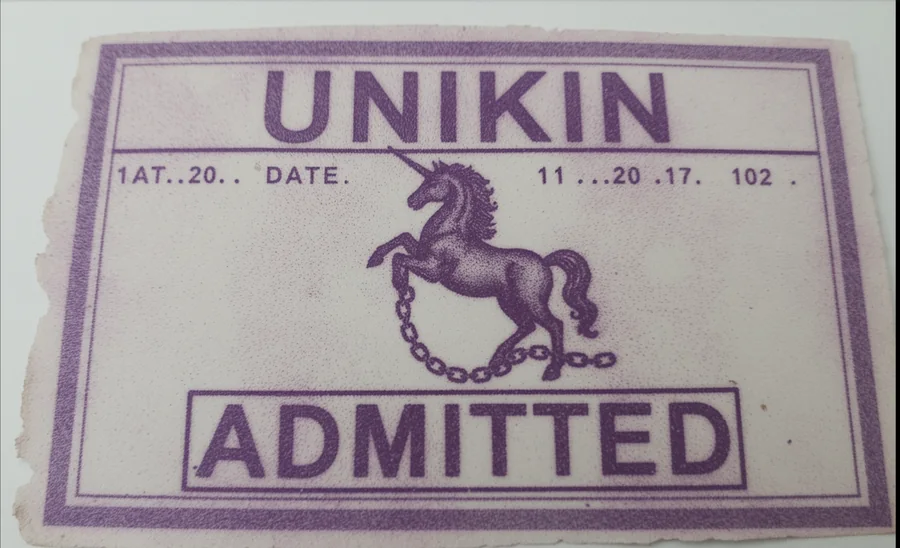
UniKin's embassy is the same arrangement rotated onto a different axis. It stands not elsewhere in space but elsewhen. The state is in 2033. The room is here.
Which is why the Time Travellers Guild houses it. An ordinary host cannot accredit a mission from a state that has not happened yet — the paperwork runs the wrong way, the credentials are signed by people who are not yet in a position to sign them, and the usual authorities have no procedure for a nation whose founding is still ahead of it. The Guild has exactly one qualification the usual authorities lack: it works across time as a matter of course. It can receive a mission from 2033 the way another host receives one from another capital.
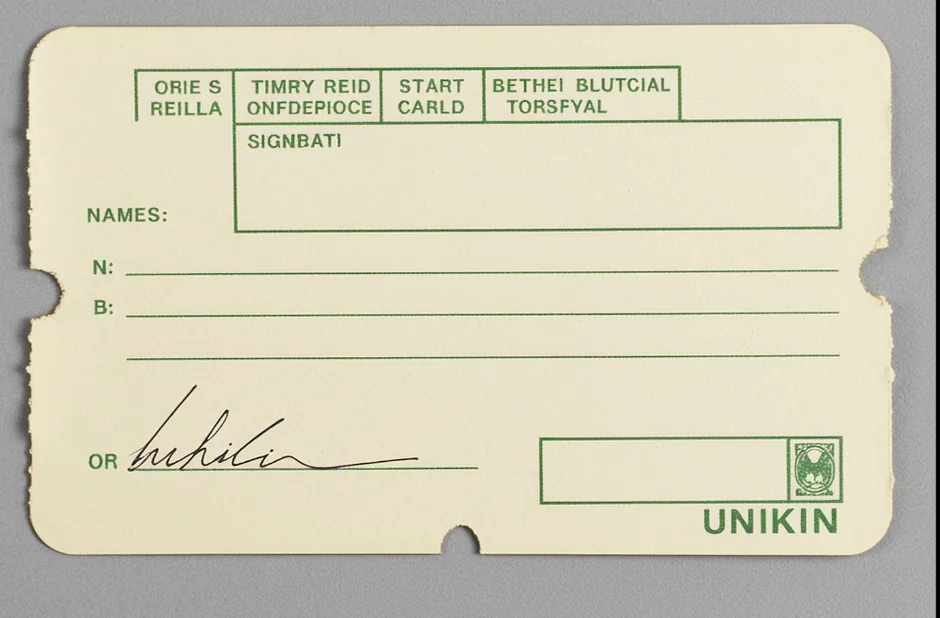
So the Embassy sits in the Guild's building, in the Upper Swansea Valley, with the Guild's own door on it: one email, no password. You reach a future state through the ordinary front desk of a present one. That is the joke and it is also the entire mechanism.
3. The peace plan
UniKin is a peace project. Not a symbolic one — an argument, made in a working form, that anyone can copy.
The argument starts from one line, the same line everything else here starts from: consent is the whole of the law.
The cause of war is not difference. It is capture.
People do not fight because they are unalike. They fight on behalf of, and against, arrangements that nobody now living agreed to and nobody may leave. A person born inside a state did not consent to it. A person who wants out mostly cannot get out. Everything downstream — conscription, blockade, the certainty that the other side's civilians are complicit — rests on that one fact: these people cannot leave, so they can be counted as belonging to the thing being fought.
So the plan is the right of exit, made real and made cheap.
Not secession, which moves a border and starts the problem again with new neighbours. Exit of persons: the ability of any individual to stop belonging, immediately, at no cost, without permission and without explanation. That is Schedule A §8, and it is the only clause in the whole Charter that cannot be amended by any majority at all.
Four things follow, and UniKin is built to demonstrate each.
- A polity you can leave has to be worth staying in. Exit disciplines a state more honestly than any election does, because it cannot be ignored or outvoted. Every Kin renews once a year, and a renewal that is never withheld is not consent, it is habit.
- Nothing may grow past the size where leaving stops working. The Roll is capped at one hundred, and the cap is the point, not a limitation to be raised later. Above a certain scale a polity stops being a thing you belong to and starts being a thing you are inside.
- Allegiance must be allowed to overlap. Kin may hold any other citizenship, nationality or micronational allegiance; the Kinhold claims no exclusivity and asks for none. Exclusive allegiance is the raw material of war. A person who belongs to several things at once is very hard to mobilise against any of them.
- Nothing may be claimed over land. A state that holds no territory has nothing to invade and nothing to defend — and therefore no frontier, which is the thing people are actually sent to die on.
And the whole of it is published, so it can be lifted.
Schedule A is free-standing and may be adopted whole by any Kinhold. That is the plan's only distribution method: no campaign, no accession process, no headquarters. A model is only a model if someone else could lift it, and a peace proposal that cannot be copied without permission has already failed its own test.
4. The house
A peace plan with no address is a pamphlet. This one has a roof.
Infinity House is given to the project by Toby Godden, on a leasehold at a peppercorn — the old device by which a thing is let for a nominal payment, so that the grant is real in law while costing the holder nothing in practice. The rent is a formality. The transfer is not.
Against it, 364 people may join the Guild and hold a share of the lodging rights of Infinity House. Not a share of the building, which is not for sale and never will be; a share of the right to be lodged in it. The Guild is the body that holds those rights and houses the Embassy. UniKin is the state the Embassy belongs to. They are two different things with two different numbers: three hundred and sixty-four in the Guild, one hundred on the Roll.
This is the part that makes the rest of it more than a document. A polity you can leave means very little if leaving means having nowhere to go. A right of lodging held in common, granted for a peppercorn, is a small practical answer to that: somewhere that is yours to be in because people agreed it is, rather than because you bought it.
It is also the clearest test of the principle. The house is given rather than sold, the lodging is held rather than owned, nothing is charged for membership, and the whole arrangement is written down where anyone can read it. Citizenship is never the product — and neither is the roof.
5. What this does not do
Each claim above has a cost, and the costs are the honest part.
This stops no tank. It is a model, not a defence, and it offers nothing to somebody already under bombardment — which is where the need is greatest and where this has least to say.
It works only where a person is already free enough to leave something. In the places where exit is most needed it is most impossible, and UniKin, which cannot be invaded because it holds nothing, also cannot shelter anyone, for the same reason.
The cap that keeps it honest also keeps it small, and small things do not end wars.
And a hundred people in a Welsh valley agreeing to a document is not a world order. It is a worked example, offered publicly, of a polity built so that nobody in it is held. Whether the example is worth anything depends entirely on how many people lift it, which is not up to us.
What it is, then, is a practice rather than a victory: a place where the thing is done properly at a size where doing it properly is possible, written down so plainly that copying it is easier than arguing with it.
The Embassy is at the Time Travellers Guild, Upper Swansea Valley, at Infinity House. It is open to anyone, Kin or not, and the Charter and its Schedule are published in full.